This supplement to FOCUS No. 87 provides an analysis of the steps taken and obstacles remaining in the process of negotiating an end to apartheid in South Africa as of early 1990. It details the partial reforms initiated by the apartheid regime, including the unbanning of political organisations, the release of some political prisoners, and the lifting of certain emergency regulations. The supplement critically examines the limitations of these reforms, the continued existence of repressive legislation, the ongoing state of emergency, and the regime's retention of significant powers of repression. It also covers the responses of the African National Congress (ANC) and the international community, and outlines the requirements of the Harare Declaration for genuine negotiations.
International Defence and Aid Fund (IDAF)Venda
13 Archival description results for Venda
This article documents the secrecy surrounding executions in South Africa during late 1988, highlighting the lack of official information prior to executions and the reliance on newspaper reports by monitoring groups. It details the execution of eight men (with one granted a stay), discrepancies in official statistics on political death sentences, and the case of George Skosana. The article also covers several trials resulting in death sentences and lengthy prison terms for individuals involved in political unrest, including the Tumahole and PUTCO cases. The text references specific individuals, events, and sources, illustrating the broader context of political repression and the use of the death penalty.
International Defence and Aid Fund (IDAF)Issue 53 details unequal prison conditions between male and female political prisoners, focusing on the treatment of Barbara Hogan and Dorothy Nyembe. It reports detentions, including youth activists, trade unionists, and ANC affiliates; describes major political trials involving ANC members and community leaders; and explores repression in Transkei, Venda, and the Ciskei. Also covered are education protests, the election boycott campaign, censorship battles over the Freedom Charter, and the release of Namibian political prisoners from Robben Island. The issue also includes coverage of SWAPO harassment, student resistance, and university unrest.
This issue reports on the release of SWAPO leader Herman Toivo ja Toivo, his public reaffirmation of SWAPO's mission, and the continued detention of Kassinga survivors. It features court actions to free detainees, detailed lists of those imprisoned, and affidavits documenting torture and unlawful detention under Proclamation AG9. It covers new detentions, student protests, pass law convictions, school boycotts, the Alexandra bus boycott, forced removals, and increasing repression in Namibia and Venda. Major sections report on death in detention, political trials, abuses by security forces, and a growing list of detainees. The newsletter also documents the high-profile trial of journalist Gwen Lister and the deportation of British researcher Alun Roberts.
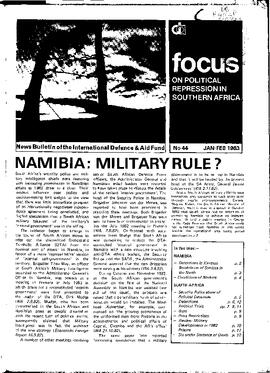
This issue focuses on increasing military control in Namibia, particularly through South Africa’s use of intelligence and military figures to override civil authority. It documents multiple cases of deaths in detention (notably in Kavango), systemic torture by security police, conditions in Namibian hospitals, repression of trade unionists, political trials (including Barbara Hogan, Cedric Mayson, and Allan Fine), abuses of the Internal Security Act, political detentions, and apartheid’s legal manipulation. Includes statistical updates, case reports, and trial summaries relating to anti-apartheid activists, students, and workers across Southern Africa.
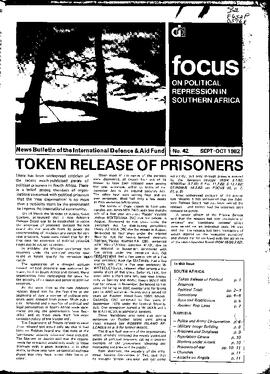
This issue focuses on the controversial parole of political prisoners in South Africa, political trials of ANC and SWAPO members, deaths in detention (Muofhe and Depale), widespread use of the Terrorism and Internal Security Acts, bannings, banishments, repression of trade unions, the Rabie Commission reforms, and intensified state surveillance. It includes reports on the torture of detainees, new legislation affecting civil liberties, restrictions on media coverage, and paramilitary operations like Koevoet in Namibia.
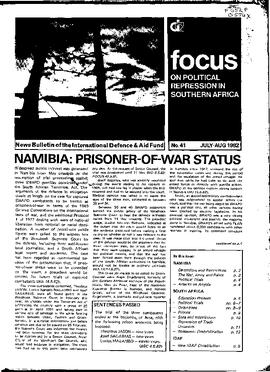
This issue reports on the trial of three SWAPO guerrillas in Namibia, with a legal challenge for prisoner-of-war status under the Geneva Conventions. Topics covered include the continued banning of Nathaniel Maxuilili, torture and detentions in northern Namibia, attacks on Angola, education boycotts, and widespread political trials in South Africa. The issue exposes security force abuses, displays of guerrilla corpses, school protest crackdowns, press censorship, and trade union repression. It also covers the new IDAF constitution and the continued use of solitary confinement and psychological torture against detainees such as Neil Aggett. Legal cases include Barbara Hogan, Oscar Mpetha, and SWAPO youth leaders, among many others.
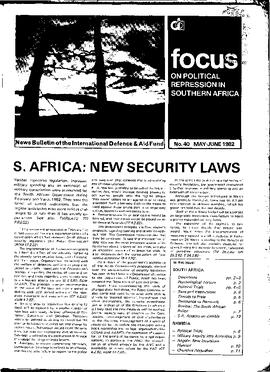
This issue reports on the tightening of apartheid security laws following the Rabie Commission, including proposed new terrorism, subversion, and sabotage laws. It details intensified repression across South Africa and Namibia, mass detentions, psychological torture, political trials, and restrictions on the press. The issue also includes a major review of the South African Police, extensive political trial updates (including Barbara Hogan, Oscar Mpetha, and SWAPO guerrillas), and the arrest and detention of many students, trade unionists, and church workers. Notably, it reports hunger strikes and deaths in custody, and increasing international protest against detention conditions.
This issue extensively documents torture by South African and Namibian security forces, including affidavits, testimonies, and reports of death in detention. Key features include the disappearance of Johannes Kakuva, violent repression of SWAPO sympathisers, use of poison gas in Angola (Operation Daisy), and the intensification of military presence in Kaokoland. It also covers numerous political trials (Oscar Mpetha, Robert Adam, Masabata Loate, etc.), repression in Ciskei and Venda, and the detention and death of unionist Dr. Neil Aggett. Detailed lists of new detainees and evidence of abuse by security forces appear throughout.
Issue 38 centers on the politically motivated assassination of anti-apartheid lawyer Griffiths Mxenge, as well as widespread detentions of students, trade unionists, and church workers. It documents deaths in detention (e.g., Tshifhiwa Muofhe, Manana Mgoweto), ongoing trials (e.g., Oscar Mpetha case), censorship, new security legislation in Namibia, and the continued militarization of Angola and Namibia. Coverage includes Operation Protea aftermath, juvenile political trials, the rise of civil disobedience by churches, bans and passport seizures, attacks on the South African Council of Churches, and the Red Cross involvement in prisoner welfare.