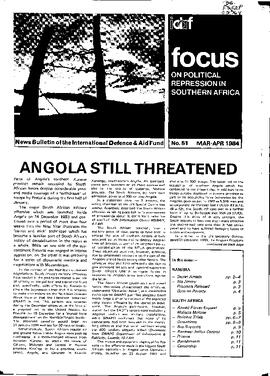
This issue details the South African invasion of southern Angola, including town occupations, bombings, and destruction of infrastructure. It provides accounts of torture and abuse of SWAPO detainees, repression in Namibia under conscription, destruction of the Anglican seminary in Odibo, mass pass arrests in the Cape, increased military and police operations in urban areas, and ongoing political detentions and trials of trade unionists, students, and ANC members. Notably, testimonies of detainees, statistics on South African aggression in Angola, and reports on religious persecution and the expansion of South African military bases are included.
Soweto
13 Archival description results for Soweto
Issue 37 provides detailed reporting on repression in the Ciskei bantustan, the South African invasion of Angola (Operation Protea), political detentions, bannings, student and trade union trials, and prison conditions. It includes first-hand accounts, trial updates (including those of Oscar Mpetha and ANC guerillas), figures on political prisoners, juvenile detentions, and restrictions on journalists. Reports also highlight police violence, attacks on press freedom, and widespread protest against 'independence' imposed on Ciskei.
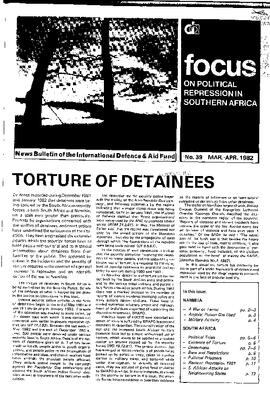
This issue extensively documents torture by South African and Namibian security forces, including affidavits, testimonies, and reports of death in detention. Key features include the disappearance of Johannes Kakuva, violent repression of SWAPO sympathisers, use of poison gas in Angola (Operation Daisy), and the intensification of military presence in Kaokoland. It also covers numerous political trials (Oscar Mpetha, Robert Adam, Masabata Loate, etc.), repression in Ciskei and Venda, and the detention and death of unionist Dr. Neil Aggett. Detailed lists of new detainees and evidence of abuse by security forces appear throughout.
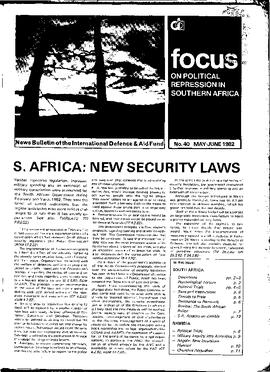
This issue reports on the tightening of apartheid security laws following the Rabie Commission, including proposed new terrorism, subversion, and sabotage laws. It details intensified repression across South Africa and Namibia, mass detentions, psychological torture, political trials, and restrictions on the press. The issue also includes a major review of the South African Police, extensive political trial updates (including Barbara Hogan, Oscar Mpetha, and SWAPO guerrillas), and the arrest and detention of many students, trade unionists, and church workers. Notably, it reports hunger strikes and deaths in custody, and increasing international protest against detention conditions.
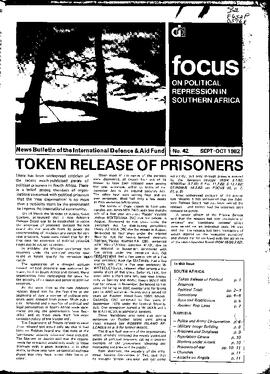
This issue focuses on the controversial parole of political prisoners in South Africa, political trials of ANC and SWAPO members, deaths in detention (Muofhe and Depale), widespread use of the Terrorism and Internal Security Acts, bannings, banishments, repression of trade unions, the Rabie Commission reforms, and intensified state surveillance. It includes reports on the torture of detainees, new legislation affecting civil liberties, restrictions on media coverage, and paramilitary operations like Koevoet in Namibia.
Issue 45 provides detailed accounts of repression through tightened pass laws, the criminalisation of residency, and the use of state security forces to restrict African movement and employment. The issue features an obituary tribute to Canon John Collins and reports on mass detentions, child imprisonment, police violence, and political trials of ANC and SWAPO members. It also includes updates on union suppression, school and student protests, the Maseru Raid, Namibia detentions, and Angola incursions. A full review of the 1982 armed struggle is included, with statistical breakdowns of sabotage operations, and evidence of state disinformation regarding guerrilla activity. Ciskei repression and its 'Sword of the Nation' squad are also featured.
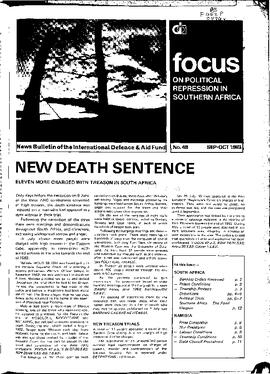
This issue highlights post-execution protests, a new death sentence, eleven treason charges in the Eastern Cape, renewed banning orders, and worsening prison conditions for political detainees. It covers township protests in Soweto and East London, police repression of rent and transport protests, numerous detentions including youth activists and clergy, and the extensive use of Section 50 of the Internal Security Act. Reports include detailed updates on treason trials, executions, state witness manipulations, prison deaths, media censorship in Namibia, the banning of Archbishop Denis Hurley's statements, and mass grave discoveries. Notably, the issue records a police massacre during a transport boycott in Mdantsane.
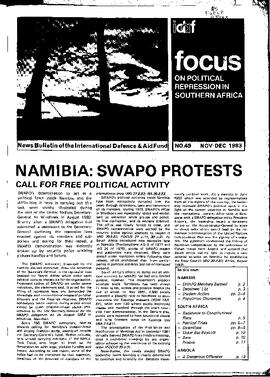
Issue 49 focuses on violent repression of SWAPO activism in Namibia during the UN Secretary-General’s visit, the ongoing arrests and torture of activists, and bans on key political figures. It includes detailed lists of restricted and detained persons, coverage of constitutional resistance through the UDF’s launch, and increasing detentions of students and trade unionists in South Africa. It also highlights the torture of detainees, psychiatric abuse, and the use of treason trials to suppress dissent. The issue documents major political trials, mass protests, state censorship, and population clearances in the Kavango region of Namibia.
This issue details South Africa’s continued occupation and military offensive in southern Angola (Operation Askari), systematic torture of detainees in Namibia, SWAPO trials, and the expansion of South Africa’s armed forces. Key topics include Ida Jimmy’s reduced sentence, Kavango detainees' torture affidavits, political trials involving ANC and PAC members, censorship enforcement, and high-profile detentions. It also highlights poverty in Namibia, with case studies revealing the state’s discriminatory benefit policies and extreme deprivation. Notable incidents include the Robben Island protest for elderly detainee release, the ‘roasting’ torture case in Kavango, and multiple political trials including that of Sister Mary Bernard Ncube.
This issue reports on the release of SWAPO leader Herman Toivo ja Toivo, his public reaffirmation of SWAPO's mission, and the continued detention of Kassinga survivors. It features court actions to free detainees, detailed lists of those imprisoned, and affidavits documenting torture and unlawful detention under Proclamation AG9. It covers new detentions, student protests, pass law convictions, school boycotts, the Alexandra bus boycott, forced removals, and increasing repression in Namibia and Venda. Major sections report on death in detention, political trials, abuses by security forces, and a growing list of detainees. The newsletter also documents the high-profile trial of journalist Gwen Lister and the deportation of British researcher Alun Roberts.