Issue 9 covers legislation protecting South African police from prosecution, increased executions in Rhodesia, death sentences from Special Courts, the SASO-BPC trial, detentions, Robben Island conditions, and deaths in detention (including Elmon Malele, Matthews Mabelane, and Samuel Malinga). The issue also reports on Rhodesian cross-border raids, student escapes to Botswana, repression in Namibia, and psychological warfare campaigns.
Pamphlets
40 Archival description results for Pamphlets
This article details a campaign by the South African regime to undermine SWAPO (South West Africa People’s Organization) and associated church groups in Namibia during the mid-1980s. It describes the infiltration of SWAPO by South African spies, the dissemination of propaganda, and the targeting of church organizations such as the Council of Churches in Namibia (CCN). The article references press conferences, confessions by captured agents, and attacks on church property, as well as the international response to these events. It also includes statements from SWAPO leaders and church officials, and discusses the broader context of repression and resistance in Namibia.
International Defence and Aid Fund (IDAF)This issue documents the aftermath of the Soweto uprising, ongoing unrest throughout South Africa, and widespread repression. Topics include political trials (ANC and Black Consciousness), arrests of children, use of the Terrorism Act and preventive detention, the role of the Riotous Assemblies Act, military operations in Ovamboland, torture allegations, and the deaths of detainees such as Mapetla Mohapi. Additional sections cover Transkei, Namibia, Rhodesia, and continued censorship and bannings.
This issue of FOCUS covers political repression and resistance in Namibia and Angola during mid-1985. Topics include police actions against Lutheran pastors in Namibia, raids on SWAPO leaders and former political prisoners, South African military activities in Angola (notably the Cabinda commando incident), and the broader context of South African withdrawal and ongoing conflict. The publication also provides subscription information and outlines the objectives and international affiliations of IDAF.
International Defence and Aid Fund (IDAF)Issue 57 outlines the intensifying political repression in South Africa and Namibia during early 1985. It highlights escalating political trials, over 1,100 detentions in 1984, censorship and state raids on press agencies, the trial of SWAPO fighters under repressive conditions, and the growing use of the Internal Security Act. The issue reports on community resistance, school boycotts, labour union suppression, press censorship, and constitutional manipulation to preserve apartheid structures. It includes detailed trial summaries, prisoner lists, and coverage of Nelson Mandela’s conditional release rejection.
Issue 56 documents an intensified wave of popular resistance and state repression in South Africa during the latter half of 1984, compared to the 1976 uprisings. It covers mass protests, rent boycotts, township uprisings, education strikes, and repression involving mass detentions, torture, and the militarization of civil areas. It includes resistance timelines, details of youth and trade unionist arrests, SWAPO resistance in Namibia, press censorship, and trials of political dissidents. Special attention is given to armed forces operations in Sebokeng, the rise of student activism through COSAS and AZASM, and censorship actions in Namibia.
Issue 55 chronicles the intensified resistance to apartheid in South Africa, focusing on rent boycotts, township uprisings, school and university protests, mass detentions, and political trials. It documents electoral boycotts of the segregated parliament, bans on political gatherings, deaths in detention, and brutal state repression. Coverage includes SWAPO's military and political strength in Namibia, press censorship, and war zone atrocities in the Kavango region. Also featured are trials of student activists, trade unionists, and members of banned organisations such as the ANC and AZAPO.
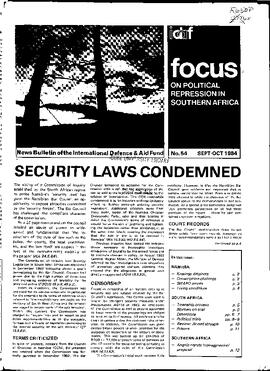
Issue 54 details condemnations of Namibian security legislation, torture and overcrowding in prisons, living conditions for Black Namibians, mass arrests of SWAPO leaders, ongoing township protests in South Africa, youth and student trials, and political detentions under apartheid. It features extensive evidence from the Namibian Bar Council challenging the legitimacy and brutality of the state's policing and detention laws, while also documenting high-profile trials and growing resistance movements.
Issue 53 details unequal prison conditions between male and female political prisoners, focusing on the treatment of Barbara Hogan and Dorothy Nyembe. It reports detentions, including youth activists, trade unionists, and ANC affiliates; describes major political trials involving ANC members and community leaders; and explores repression in Transkei, Venda, and the Ciskei. Also covered are education protests, the election boycott campaign, censorship battles over the Freedom Charter, and the release of Namibian political prisoners from Robben Island. The issue also includes coverage of SWAPO harassment, student resistance, and university unrest.
This issue reports on the release of SWAPO leader Herman Toivo ja Toivo, his public reaffirmation of SWAPO's mission, and the continued detention of Kassinga survivors. It features court actions to free detainees, detailed lists of those imprisoned, and affidavits documenting torture and unlawful detention under Proclamation AG9. It covers new detentions, student protests, pass law convictions, school boycotts, the Alexandra bus boycott, forced removals, and increasing repression in Namibia and Venda. Major sections report on death in detention, political trials, abuses by security forces, and a growing list of detainees. The newsletter also documents the high-profile trial of journalist Gwen Lister and the deportation of British researcher Alun Roberts.