Issue 57 outlines the intensifying political repression in South Africa and Namibia during early 1985. It highlights escalating political trials, over 1,100 detentions in 1984, censorship and state raids on press agencies, the trial of SWAPO fighters under repressive conditions, and the growing use of the Internal Security Act. The issue reports on community resistance, school boycotts, labour union suppression, press censorship, and constitutional manipulation to preserve apartheid structures. It includes detailed trial summaries, prisoner lists, and coverage of Nelson Mandela’s conditional release rejection.
Newsletters
22 Archival description results for Newsletters
Issue 54 details condemnations of Namibian security legislation, torture and overcrowding in prisons, living conditions for Black Namibians, mass arrests of SWAPO leaders, ongoing township protests in South Africa, youth and student trials, and political detentions under apartheid. It features extensive evidence from the Namibian Bar Council challenging the legitimacy and brutality of the state's policing and detention laws, while also documenting high-profile trials and growing resistance movements.
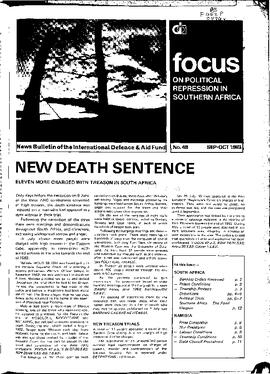
This issue highlights post-execution protests, a new death sentence, eleven treason charges in the Eastern Cape, renewed banning orders, and worsening prison conditions for political detainees. It covers township protests in Soweto and East London, police repression of rent and transport protests, numerous detentions including youth activists and clergy, and the extensive use of Section 50 of the Internal Security Act. Reports include detailed updates on treason trials, executions, state witness manipulations, prison deaths, media censorship in Namibia, the banning of Archbishop Denis Hurley's statements, and mass grave discoveries. Notably, the issue records a police massacre during a transport boycott in Mdantsane.
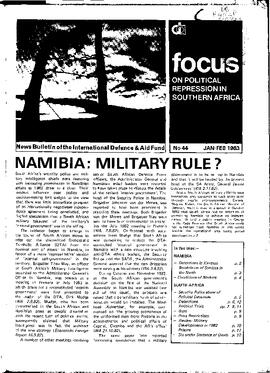
This issue focuses on increasing military control in Namibia, particularly through South Africa’s use of intelligence and military figures to override civil authority. It documents multiple cases of deaths in detention (notably in Kavango), systemic torture by security police, conditions in Namibian hospitals, repression of trade unionists, political trials (including Barbara Hogan, Cedric Mayson, and Allan Fine), abuses of the Internal Security Act, political detentions, and apartheid’s legal manipulation. Includes statistical updates, case reports, and trial summaries relating to anti-apartheid activists, students, and workers across Southern Africa.
Issue 43 provides in-depth coverage of labour repression in South Africa, including mass strikes, police violence, dockworker and miner disputes, and the suppression of the General Workers Union. It documents political trials of ANC members, including those of Barbara Hogan, Alan Fine, and others, with graphic accounts of torture. The issue includes updates on detentions and preventive detention under the new Internal Security Act, the massacre at Oshikuku (Namibia), SWAPO activities, and constitutional reforms aimed at entrenching apartheid. A full list of political detainees and those who died in custody since 1963 is also included.
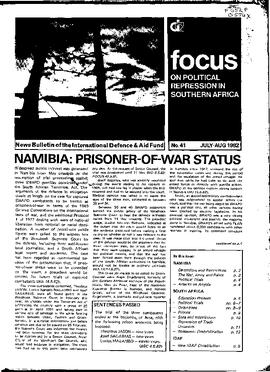
This issue reports on the trial of three SWAPO guerrillas in Namibia, with a legal challenge for prisoner-of-war status under the Geneva Conventions. Topics covered include the continued banning of Nathaniel Maxuilili, torture and detentions in northern Namibia, attacks on Angola, education boycotts, and widespread political trials in South Africa. The issue exposes security force abuses, displays of guerrilla corpses, school protest crackdowns, press censorship, and trade union repression. It also covers the new IDAF constitution and the continued use of solitary confinement and psychological torture against detainees such as Neil Aggett. Legal cases include Barbara Hogan, Oscar Mpetha, and SWAPO youth leaders, among many others.
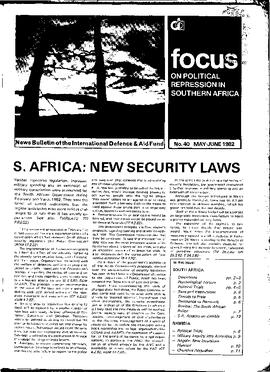
This issue reports on the tightening of apartheid security laws following the Rabie Commission, including proposed new terrorism, subversion, and sabotage laws. It details intensified repression across South Africa and Namibia, mass detentions, psychological torture, political trials, and restrictions on the press. The issue also includes a major review of the South African Police, extensive political trial updates (including Barbara Hogan, Oscar Mpetha, and SWAPO guerrillas), and the arrest and detention of many students, trade unionists, and church workers. Notably, it reports hunger strikes and deaths in custody, and increasing international protest against detention conditions.
Issue 38 centers on the politically motivated assassination of anti-apartheid lawyer Griffiths Mxenge, as well as widespread detentions of students, trade unionists, and church workers. It documents deaths in detention (e.g., Tshifhiwa Muofhe, Manana Mgoweto), ongoing trials (e.g., Oscar Mpetha case), censorship, new security legislation in Namibia, and the continued militarization of Angola and Namibia. Coverage includes Operation Protea aftermath, juvenile political trials, the rise of civil disobedience by churches, bans and passport seizures, attacks on the South African Council of Churches, and the Red Cross involvement in prisoner welfare.
This issue highlights intensified South African military operations in northern Namibia and southern Angola, including troop build-ups, air and land attacks, and damage to Angolan infrastructure. It covers the formation of the South West Africa Police (SWAP), the continued detention and reported torture of Kassinga detainees, and testimony from Ida Jimmy, a SWAPO political prisoner. The issue also details major political trials in South Africa, including those of Oscar Mpetha, Guy Berger, Devandiren Pillay, and various students and unionists. There are detailed accounts of new bannings, forced removals under the Group Areas Act, school repression, press censorship, and a complete list of detentions and releases under apartheid security laws.
This issue documents the South African raid on ANC residences in Matola, Mozambique, killing 15 people, including ANC and SACTU members. It reports widespread detentions, school boycotts, union crackdowns, and new censorship laws. It includes a testimony from SWAPO's Axel Johannes detailing 15 months of solitary detention under Proclamation AG26. Key events include the banning of six journalists, mass opposition to conscription in Namibia, accounts of torture, detentions of AZAPO members, the death of Jonas Shimuefeleni on Robben Island, and the escape of Kassinga detainees. The issue underscores militarization in Namibia, legal mechanisms used for indefinite detention, and state suppression of media and civil liberties.