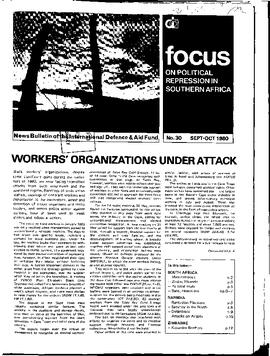
This issue documents intensified repression of black trade unions, including police brutality, deportations, and censorship of union material. It covers mass removals under apartheid laws, including the Hout Bay evictions, relocation of farm squatters, and resettlement for wildlife conservation. A major feature is the in-depth testimony of ANC official Zinjiva Nkondo, abducted and interrogated by South African security forces. Also included are reports on student repression in the bantustans, widespread bans on political gatherings, censorship of Mandela campaign material, trials of ANC guerrillas, Robben Island prison conditions, and Namibia's 'internal settlement' military and administrative developments.
Namibia
6 Description archivistique résultats pour Namibia
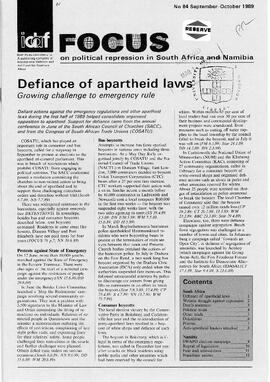
This issue of FOCUS covers labour disputes and union activities in Namibia during the first half of 1989, including strikes and negotiations involving NUNW affiliates such as NAPWU, NAFAU, MANWU, and MUN. It also reports on political prisoners, including ongoing detentions and legal proceedings. The publication provides context on the relationship between unions and SWAPO during the transition to independence, and includes a list of sources and abbreviations.
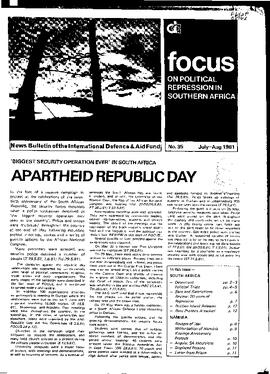
Sans titreThis issue documents the massive state security operation during anti-Republic Day protests, widespread student and labor detentions, guerilla actions by the ANC, and extensive trials under apartheid-era laws. Major topics include detentions of COSAS members, SAAWU and AZAPO activists, Robben Island releases, union suppression, and forced removals. It contains full trial listings, bans and restrictions, Namibia militarization, Kassinga anniversary, and a historical review of 20 years of repression since the Republic’s founding. The issue also exposes systemic use of torture, curfews, censorship, rape by soldiers, and the conscription system in Namibia.
Issue 38 centers on the politically motivated assassination of anti-apartheid lawyer Griffiths Mxenge, as well as widespread detentions of students, trade unionists, and church workers. It documents deaths in detention (e.g., Tshifhiwa Muofhe, Manana Mgoweto), ongoing trials (e.g., Oscar Mpetha case), censorship, new security legislation in Namibia, and the continued militarization of Angola and Namibia. Coverage includes Operation Protea aftermath, juvenile political trials, the rise of civil disobedience by churches, bans and passport seizures, attacks on the South African Council of Churches, and the Red Cross involvement in prisoner welfare.
This issue documents the death sentence imposed on Markus Kateka in Namibia, mass detentions under apartheid and occupation laws, torture and health crises in prisons, political trials involving ANC and SWAPO activists, testimonies of disappearances and cross-border raids, and systemic repression through censorship, bannings, and restrictions on civil society. Highlights include the trials of ANC guerrillas, the SWAPO activist Ida Jimmy, brutal detention of juveniles, the case of Dr. Nafta Hamata, and state-sanctioned killings and disappearances in Namibia. The issue also includes coverage of forced removals, health inequalities under apartheid rule, and testimony to international bodies including the UN and OAU about South African attacks in Angola.
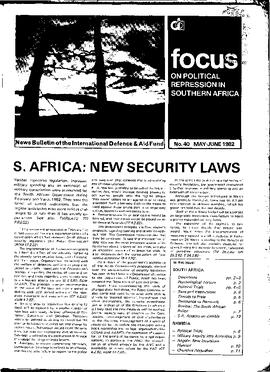
This issue reports on the tightening of apartheid security laws following the Rabie Commission, including proposed new terrorism, subversion, and sabotage laws. It details intensified repression across South Africa and Namibia, mass detentions, psychological torture, political trials, and restrictions on the press. The issue also includes a major review of the South African Police, extensive political trial updates (including Barbara Hogan, Oscar Mpetha, and SWAPO guerrillas), and the arrest and detention of many students, trade unionists, and church workers. Notably, it reports hunger strikes and deaths in custody, and increasing international protest against detention conditions.