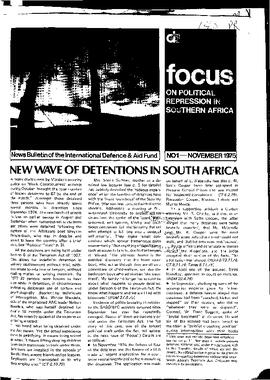
Issue No. 1 of 'Focus' bulletin, dated November 1975, detailing the intensification of political repression in Southern Africa, including mass detentions, torture, political trials under the Terrorism Act, and increasing use of banning orders. Specific cases, trials, and legislative actions in South Africa, Rhodesia, and Namibia are described.
Katutura
9 Archival description results for Katutura
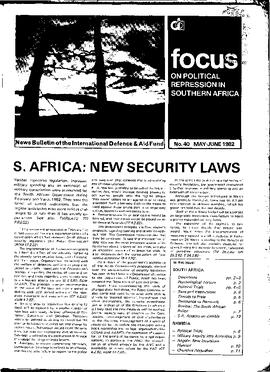
This issue reports on the tightening of apartheid security laws following the Rabie Commission, including proposed new terrorism, subversion, and sabotage laws. It details intensified repression across South Africa and Namibia, mass detentions, psychological torture, political trials, and restrictions on the press. The issue also includes a major review of the South African Police, extensive political trial updates (including Barbara Hogan, Oscar Mpetha, and SWAPO guerrillas), and the arrest and detention of many students, trade unionists, and church workers. Notably, it reports hunger strikes and deaths in custody, and increasing international protest against detention conditions.
This issue focuses on the controversial parole of political prisoners in South Africa, political trials of ANC and SWAPO members, deaths in detention (Muofhe and Depale), widespread use of the Terrorism and Internal Security Acts, bannings, banishments, repression of trade unions, the Rabie Commission reforms, and intensified state surveillance. It includes reports on the torture of detainees, new legislation affecting civil liberties, restrictions on media coverage, and paramilitary operations like Koevoet in Namibia.
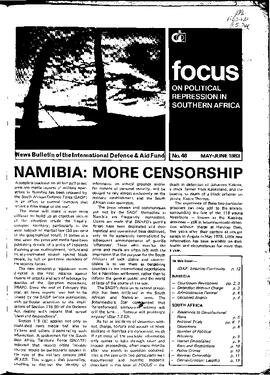
This issue covers the imposition of strict military censorship in Namibia by the SADF, the deaths of detainees including Kasire Thomas and Johannes Kakuva, mass arrests under Proclamation AG9, forced labour of prisoners, torture trials and revelations, and systemic suppression of opposition to apartheid-era constitutional reforms. It highlights SWAPO resistance, the banning of the Namibia Report by Archbishop Denis Hurley, police raids on churches, the Mawaala sabotage trial, and trials of numerous ANC activists. A statistical roundup of detentions and court cases also illustrates escalating state violence.
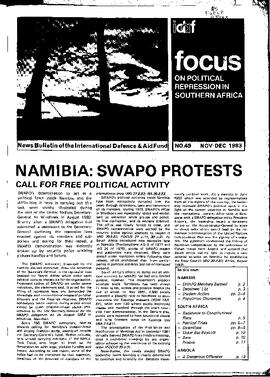
Issue 49 focuses on violent repression of SWAPO activism in Namibia during the UN Secretary-General’s visit, the ongoing arrests and torture of activists, and bans on key political figures. It includes detailed lists of restricted and detained persons, coverage of constitutional resistance through the UDF’s launch, and increasing detentions of students and trade unionists in South Africa. It also highlights the torture of detainees, psychiatric abuse, and the use of treason trials to suppress dissent. The issue documents major political trials, mass protests, state censorship, and population clearances in the Kavango region of Namibia.
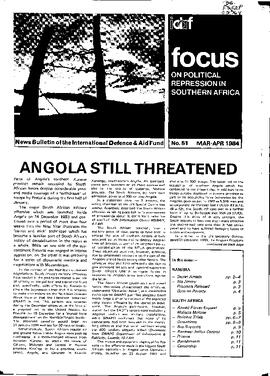
This issue details South Africa’s continued occupation and military offensive in southern Angola (Operation Askari), systematic torture of detainees in Namibia, SWAPO trials, and the expansion of South Africa’s armed forces. Key topics include Ida Jimmy’s reduced sentence, Kavango detainees' torture affidavits, political trials involving ANC and PAC members, censorship enforcement, and high-profile detentions. It also highlights poverty in Namibia, with case studies revealing the state’s discriminatory benefit policies and extreme deprivation. Notable incidents include the Robben Island protest for elderly detainee release, the ‘roasting’ torture case in Kavango, and multiple political trials including that of Sister Mary Bernard Ncube.
Issue 53 details unequal prison conditions between male and female political prisoners, focusing on the treatment of Barbara Hogan and Dorothy Nyembe. It reports detentions, including youth activists, trade unionists, and ANC affiliates; describes major political trials involving ANC members and community leaders; and explores repression in Transkei, Venda, and the Ciskei. Also covered are education protests, the election boycott campaign, censorship battles over the Freedom Charter, and the release of Namibian political prisoners from Robben Island. The issue also includes coverage of SWAPO harassment, student resistance, and university unrest.
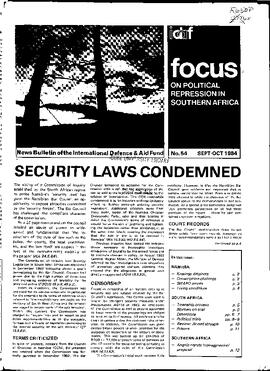
Issue 54 details condemnations of Namibian security legislation, torture and overcrowding in prisons, living conditions for Black Namibians, mass arrests of SWAPO leaders, ongoing township protests in South Africa, youth and student trials, and political detentions under apartheid. It features extensive evidence from the Namibian Bar Council challenging the legitimacy and brutality of the state's policing and detention laws, while also documenting high-profile trials and growing resistance movements.
Issue 56 documents an intensified wave of popular resistance and state repression in South Africa during the latter half of 1984, compared to the 1976 uprisings. It covers mass protests, rent boycotts, township uprisings, education strikes, and repression involving mass detentions, torture, and the militarization of civil areas. It includes resistance timelines, details of youth and trade unionist arrests, SWAPO resistance in Namibia, press censorship, and trials of political dissidents. Special attention is given to armed forces operations in Sebokeng, the rise of student activism through COSAS and AZASM, and censorship actions in Namibia.