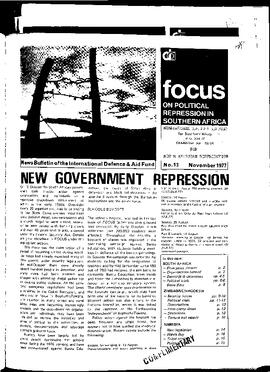
This issue reports the mass banning of Black Consciousness organisations and individuals on 19 October 1977, including the SASO, BPC, and Soweto Students’ Representative Council. It details arrests, detentions, and police violence during student uprisings and protests, particularly in Soweto, Eastern Cape, and universities. Coverage includes Steve Biko’s death in detention, memorial actions, and international solidarity. Rhodesian repression, Namibian occupation, and emergency powers in Bophuthatswana and Ciskei are also covered. Political trials, such as the Pretoria Twelve and Springs Six, and inquests into deaths in detention are documented.
Internal Security Act
13 Descripción archivística resultados para Internal Security Act
Issue 45 provides detailed accounts of repression through tightened pass laws, the criminalisation of residency, and the use of state security forces to restrict African movement and employment. The issue features an obituary tribute to Canon John Collins and reports on mass detentions, child imprisonment, police violence, and political trials of ANC and SWAPO members. It also includes updates on union suppression, school and student protests, the Maseru Raid, Namibia detentions, and Angola incursions. A full review of the 1982 armed struggle is included, with statistical breakdowns of sabotage operations, and evidence of state disinformation regarding guerrilla activity. Ciskei repression and its 'Sword of the Nation' squad are also featured.
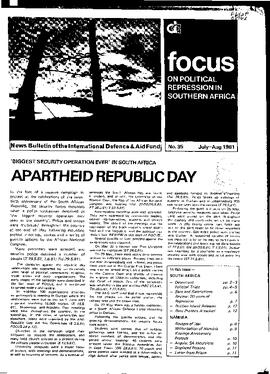
This issue documents the massive state security operation during anti-Republic Day protests, widespread student and labor detentions, guerilla actions by the ANC, and extensive trials under apartheid-era laws. Major topics include detentions of COSAS members, SAAWU and AZAPO activists, Robben Island releases, union suppression, and forced removals. It contains full trial listings, bans and restrictions, Namibia militarization, Kassinga anniversary, and a historical review of 20 years of repression since the Republic’s founding. The issue also exposes systemic use of torture, curfews, censorship, rape by soldiers, and the conscription system in Namibia.
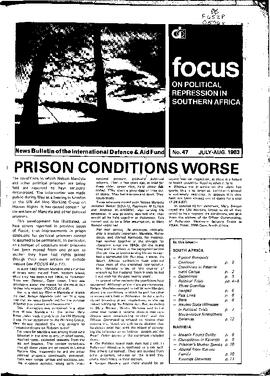
This issue documents the worsening prison conditions for Nelson Mandela and fellow political prisoners at Pollsmoor Prison, state-sanctioned forced removals and the killing of community leader Saul Mkhize, child malnutrition and mortality in resettlement camps, mass detentions and psychiatric abuse of detainees, repression in the Ciskei bantustan, and the execution of ANC guerrillas. It provides updates on extensive political trials including Oscar Mpetha, Cedric Mayson, Siphiwe Makhathini, and Angula Mwaala (SWAPO). The issue contains a special review of state witnesses, torture allegations, and continuing evidence of apartheid legal manipulation and brutality.
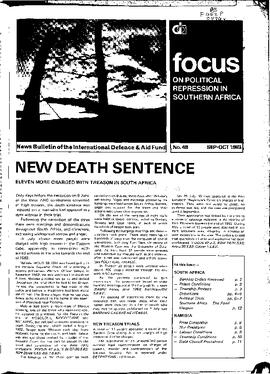
This issue highlights post-execution protests, a new death sentence, eleven treason charges in the Eastern Cape, renewed banning orders, and worsening prison conditions for political detainees. It covers township protests in Soweto and East London, police repression of rent and transport protests, numerous detentions including youth activists and clergy, and the extensive use of Section 50 of the Internal Security Act. Reports include detailed updates on treason trials, executions, state witness manipulations, prison deaths, media censorship in Namibia, the banning of Archbishop Denis Hurley's statements, and mass grave discoveries. Notably, the issue records a police massacre during a transport boycott in Mdantsane.
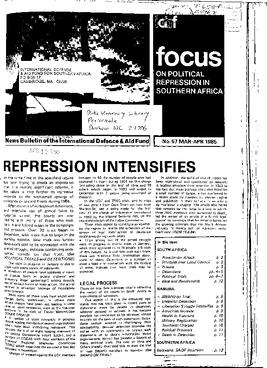
Issue 57 outlines the intensifying political repression in South Africa and Namibia during early 1985. It highlights escalating political trials, over 1,100 detentions in 1984, censorship and state raids on press agencies, the trial of SWAPO fighters under repressive conditions, and the growing use of the Internal Security Act. The issue reports on community resistance, school boycotts, labour union suppression, press censorship, and constitutional manipulation to preserve apartheid structures. It includes detailed trial summaries, prisoner lists, and coverage of Nelson Mandela’s conditional release rejection.
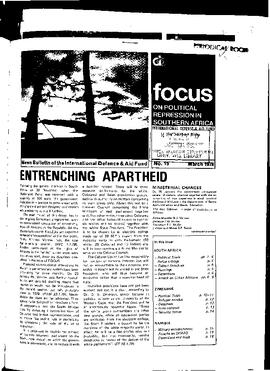
This issue details the South African government's deepening apartheid policies after the 1977 elections, repression through political trials, detentions, and bannings. Major trials include the Pretoria Twelve, Springs Six, and PAC-related cases. It reports on torture in Namibia, police killings, arson trials, and student resistance. The issue includes coverage of Steve Biko’s aftermath, the death of Robert Sobukwe, Soweto’s community council elections, detentions of minors, and rising legal and political suppression.
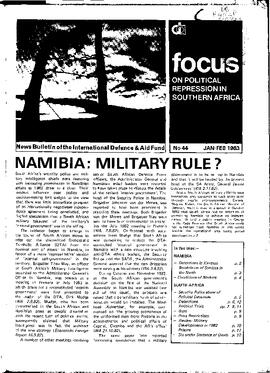
This issue focuses on increasing military control in Namibia, particularly through South Africa’s use of intelligence and military figures to override civil authority. It documents multiple cases of deaths in detention (notably in Kavango), systemic torture by security police, conditions in Namibian hospitals, repression of trade unionists, political trials (including Barbara Hogan, Cedric Mayson, and Allan Fine), abuses of the Internal Security Act, political detentions, and apartheid’s legal manipulation. Includes statistical updates, case reports, and trial summaries relating to anti-apartheid activists, students, and workers across Southern Africa.
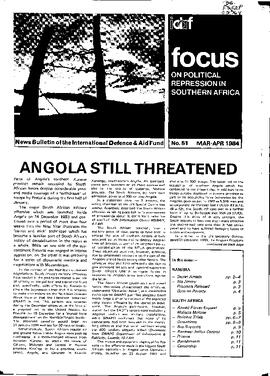
This issue details South Africa’s continued occupation and military offensive in southern Angola (Operation Askari), systematic torture of detainees in Namibia, SWAPO trials, and the expansion of South Africa’s armed forces. Key topics include Ida Jimmy’s reduced sentence, Kavango detainees' torture affidavits, political trials involving ANC and PAC members, censorship enforcement, and high-profile detentions. It also highlights poverty in Namibia, with case studies revealing the state’s discriminatory benefit policies and extreme deprivation. Notable incidents include the Robben Island protest for elderly detainee release, the ‘roasting’ torture case in Kavango, and multiple political trials including that of Sister Mary Bernard Ncube.
This issue reports on the release of SWAPO leader Herman Toivo ja Toivo, his public reaffirmation of SWAPO's mission, and the continued detention of Kassinga survivors. It features court actions to free detainees, detailed lists of those imprisoned, and affidavits documenting torture and unlawful detention under Proclamation AG9. It covers new detentions, student protests, pass law convictions, school boycotts, the Alexandra bus boycott, forced removals, and increasing repression in Namibia and Venda. Major sections report on death in detention, political trials, abuses by security forces, and a growing list of detainees. The newsletter also documents the high-profile trial of journalist Gwen Lister and the deportation of British researcher Alun Roberts.