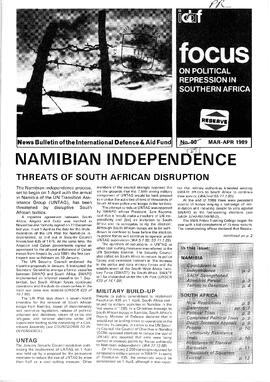
This issue reports on the tightening of apartheid security laws following the Rabie Commission, including proposed new terrorism, subversion, and sabotage laws. It details intensified repression across South Africa and Namibia, mass detentions, psychological torture, political trials, and restrictions on the press. The issue also includes a major review of the South African Police, extensive political trial updates (including Barbara Hogan, Oscar Mpetha, and SWAPO guerrillas), and the arrest and detention of many students, trade unionists, and church workers. Notably, it reports hunger strikes and deaths in custody, and increasing international protest against detention conditions.
Forced removals
14 Descrição arquivística resultados para Forced removals
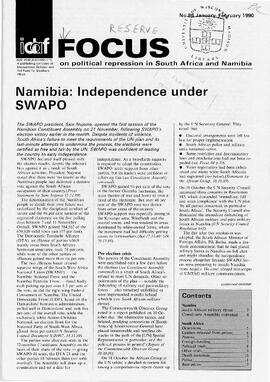
Issue 49 focuses on violent repression of SWAPO activism in Namibia during the UN Secretary-General’s visit, the ongoing arrests and torture of activists, and bans on key political figures. It includes detailed lists of restricted and detained persons, coverage of constitutional resistance through the UDF’s launch, and increasing detentions of students and trade unionists in South Africa. It also highlights the torture of detainees, psychiatric abuse, and the use of treason trials to suppress dissent. The issue documents major political trials, mass protests, state censorship, and population clearances in the Kavango region of Namibia.
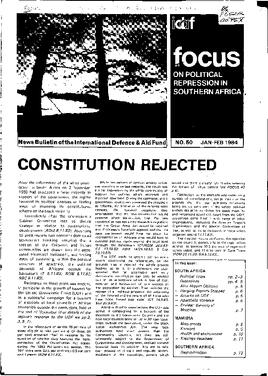
Issue 50 covers the widespread rejection of South Africa’s new constitution by black communities, intensified state repression through arrests, treason trials, and censorship. It documents the brutal crackdown on the United Democratic Front (UDF), mass arrests in Namibia’s Kavango region, detentions of students and clergy, torture, trials under the Internal Security Act, and township resistance. The issue also includes coverage of Inkatha violence, the banning of political meetings, police shootings, and hanging secrecy policies. An obituary for Alex Hepple is included.
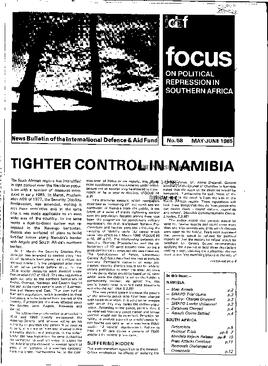
This issue of 'Focus' documents the forced removals of black South Africans from designated 'black spots' and rural communities, including KwaNgema and Huhudi, during 1984-1985. It details government policies, legal challenges, and community resistance to removals to bantustans such as KaNgwane, KwaZulu, and Bophuthatswana. The publication also provides statistics from the Surplus People Project and references to media coverage. It outlines the objectives and international affiliations of IDAF, and includes a catalogue of IDAF publications.
Sem título