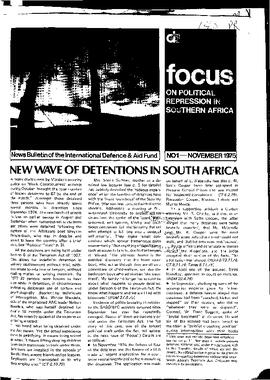
Issue No. 1 of 'Focus' bulletin, dated November 1975, detailing the intensification of political repression in Southern Africa, including mass detentions, torture, political trials under the Terrorism Act, and increasing use of banning orders. Specific cases, trials, and legislative actions in South Africa, Rhodesia, and Namibia are described.
Durban
20 Archival description results for Durban
Issue 38 centers on the politically motivated assassination of anti-apartheid lawyer Griffiths Mxenge, as well as widespread detentions of students, trade unionists, and church workers. It documents deaths in detention (e.g., Tshifhiwa Muofhe, Manana Mgoweto), ongoing trials (e.g., Oscar Mpetha case), censorship, new security legislation in Namibia, and the continued militarization of Angola and Namibia. Coverage includes Operation Protea aftermath, juvenile political trials, the rise of civil disobedience by churches, bans and passport seizures, attacks on the South African Council of Churches, and the Red Cross involvement in prisoner welfare.
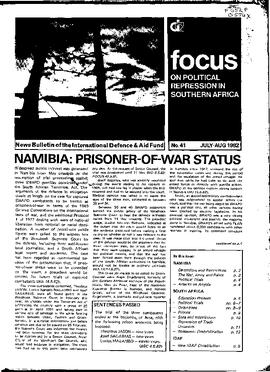
This issue reports on the trial of three SWAPO guerrillas in Namibia, with a legal challenge for prisoner-of-war status under the Geneva Conventions. Topics covered include the continued banning of Nathaniel Maxuilili, torture and detentions in northern Namibia, attacks on Angola, education boycotts, and widespread political trials in South Africa. The issue exposes security force abuses, displays of guerrilla corpses, school protest crackdowns, press censorship, and trade union repression. It also covers the new IDAF constitution and the continued use of solitary confinement and psychological torture against detainees such as Neil Aggett. Legal cases include Barbara Hogan, Oscar Mpetha, and SWAPO youth leaders, among many others.
Issue 43 provides in-depth coverage of labour repression in South Africa, including mass strikes, police violence, dockworker and miner disputes, and the suppression of the General Workers Union. It documents political trials of ANC members, including those of Barbara Hogan, Alan Fine, and others, with graphic accounts of torture. The issue includes updates on detentions and preventive detention under the new Internal Security Act, the massacre at Oshikuku (Namibia), SWAPO activities, and constitutional reforms aimed at entrenching apartheid. A full list of political detainees and those who died in custody since 1963 is also included.
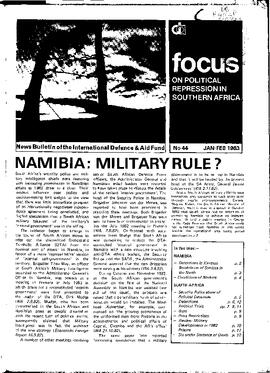
This issue focuses on increasing military control in Namibia, particularly through South Africa’s use of intelligence and military figures to override civil authority. It documents multiple cases of deaths in detention (notably in Kavango), systemic torture by security police, conditions in Namibian hospitals, repression of trade unionists, political trials (including Barbara Hogan, Cedric Mayson, and Allan Fine), abuses of the Internal Security Act, political detentions, and apartheid’s legal manipulation. Includes statistical updates, case reports, and trial summaries relating to anti-apartheid activists, students, and workers across Southern Africa.
Issue 45 provides detailed accounts of repression through tightened pass laws, the criminalisation of residency, and the use of state security forces to restrict African movement and employment. The issue features an obituary tribute to Canon John Collins and reports on mass detentions, child imprisonment, police violence, and political trials of ANC and SWAPO members. It also includes updates on union suppression, school and student protests, the Maseru Raid, Namibia detentions, and Angola incursions. A full review of the 1982 armed struggle is included, with statistical breakdowns of sabotage operations, and evidence of state disinformation regarding guerrilla activity. Ciskei repression and its 'Sword of the Nation' squad are also featured.
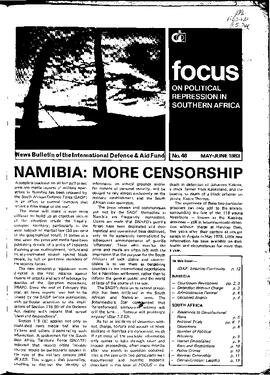
This issue covers the imposition of strict military censorship in Namibia by the SADF, the deaths of detainees including Kasire Thomas and Johannes Kakuva, mass arrests under Proclamation AG9, forced labour of prisoners, torture trials and revelations, and systemic suppression of opposition to apartheid-era constitutional reforms. It highlights SWAPO resistance, the banning of the Namibia Report by Archbishop Denis Hurley, police raids on churches, the Mawaala sabotage trial, and trials of numerous ANC activists. A statistical roundup of detentions and court cases also illustrates escalating state violence.
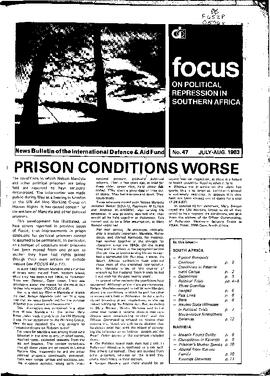
This issue documents the worsening prison conditions for Nelson Mandela and fellow political prisoners at Pollsmoor Prison, state-sanctioned forced removals and the killing of community leader Saul Mkhize, child malnutrition and mortality in resettlement camps, mass detentions and psychiatric abuse of detainees, repression in the Ciskei bantustan, and the execution of ANC guerrillas. It provides updates on extensive political trials including Oscar Mpetha, Cedric Mayson, Siphiwe Makhathini, and Angula Mwaala (SWAPO). The issue contains a special review of state witnesses, torture allegations, and continuing evidence of apartheid legal manipulation and brutality.
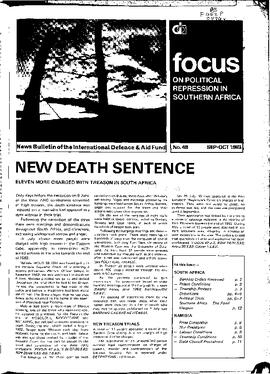
This issue highlights post-execution protests, a new death sentence, eleven treason charges in the Eastern Cape, renewed banning orders, and worsening prison conditions for political detainees. It covers township protests in Soweto and East London, police repression of rent and transport protests, numerous detentions including youth activists and clergy, and the extensive use of Section 50 of the Internal Security Act. Reports include detailed updates on treason trials, executions, state witness manipulations, prison deaths, media censorship in Namibia, the banning of Archbishop Denis Hurley's statements, and mass grave discoveries. Notably, the issue records a police massacre during a transport boycott in Mdantsane.
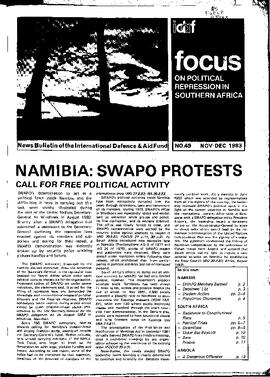
Issue 49 focuses on violent repression of SWAPO activism in Namibia during the UN Secretary-General’s visit, the ongoing arrests and torture of activists, and bans on key political figures. It includes detailed lists of restricted and detained persons, coverage of constitutional resistance through the UDF’s launch, and increasing detentions of students and trade unionists in South Africa. It also highlights the torture of detainees, psychiatric abuse, and the use of treason trials to suppress dissent. The issue documents major political trials, mass protests, state censorship, and population clearances in the Kavango region of Namibia.