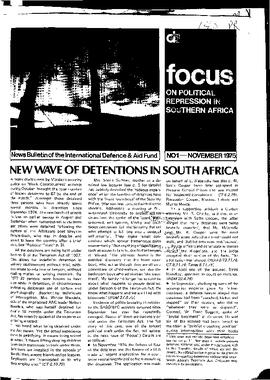
Issue No. 1 of 'Focus' bulletin, dated November 1975, detailing the intensification of political repression in Southern Africa, including mass detentions, torture, political trials under the Terrorism Act, and increasing use of banning orders. Specific cases, trials, and legislative actions in South Africa, Rhodesia, and Namibia are described.
Cape Town
15 Archival description results for Cape Town
This issue covers school boycotts and the violent repression of student protest in South Africa, particularly in the Cape and Transvaal provinces. It details political trials, including the ANC guerrilla trials, the imprisonment of journalist Msekeli Mgijima, and union repression cases. Detentions under various security laws are documented, including hunger strikes, torture allegations, and the death of a Transkei official in custody. The newsletter features an interview with SWAPO President Sam Nujoma, highlighting repression in Namibia, including new police units, forced removals, and militarization. Also covered are conditions in Robben Island, internal exile, and the targeting of student activists and civic leaders. A large section lists detainees and political prisoners.
This issue details the South African invasion of southern Angola, including town occupations, bombings, and destruction of infrastructure. It provides accounts of torture and abuse of SWAPO detainees, repression in Namibia under conscription, destruction of the Anglican seminary in Odibo, mass pass arrests in the Cape, increased military and police operations in urban areas, and ongoing political detentions and trials of trade unionists, students, and ANC members. Notably, testimonies of detainees, statistics on South African aggression in Angola, and reports on religious persecution and the expansion of South African military bases are included.
Issue 37 provides detailed reporting on repression in the Ciskei bantustan, the South African invasion of Angola (Operation Protea), political detentions, bannings, student and trade union trials, and prison conditions. It includes first-hand accounts, trial updates (including those of Oscar Mpetha and ANC guerillas), figures on political prisoners, juvenile detentions, and restrictions on journalists. Reports also highlight police violence, attacks on press freedom, and widespread protest against 'independence' imposed on Ciskei.
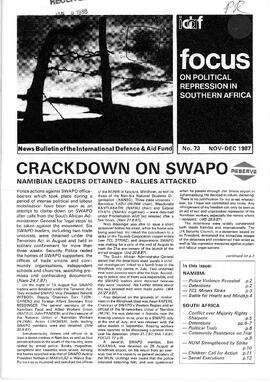
This issue reports on the tightening of apartheid security laws following the Rabie Commission, including proposed new terrorism, subversion, and sabotage laws. It details intensified repression across South Africa and Namibia, mass detentions, psychological torture, political trials, and restrictions on the press. The issue also includes a major review of the South African Police, extensive political trial updates (including Barbara Hogan, Oscar Mpetha, and SWAPO guerrillas), and the arrest and detention of many students, trade unionists, and church workers. Notably, it reports hunger strikes and deaths in custody, and increasing international protest against detention conditions.
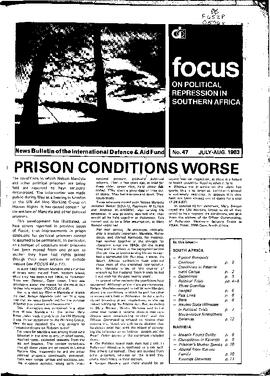
This issue documents the worsening prison conditions for Nelson Mandela and fellow political prisoners at Pollsmoor Prison, state-sanctioned forced removals and the killing of community leader Saul Mkhize, child malnutrition and mortality in resettlement camps, mass detentions and psychiatric abuse of detainees, repression in the Ciskei bantustan, and the execution of ANC guerrillas. It provides updates on extensive political trials including Oscar Mpetha, Cedric Mayson, Siphiwe Makhathini, and Angula Mwaala (SWAPO). The issue contains a special review of state witnesses, torture allegations, and continuing evidence of apartheid legal manipulation and brutality.
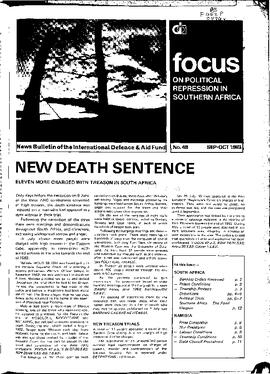
This issue highlights post-execution protests, a new death sentence, eleven treason charges in the Eastern Cape, renewed banning orders, and worsening prison conditions for political detainees. It covers township protests in Soweto and East London, police repression of rent and transport protests, numerous detentions including youth activists and clergy, and the extensive use of Section 50 of the Internal Security Act. Reports include detailed updates on treason trials, executions, state witness manipulations, prison deaths, media censorship in Namibia, the banning of Archbishop Denis Hurley's statements, and mass grave discoveries. Notably, the issue records a police massacre during a transport boycott in Mdantsane.
Issue 49 focuses on violent repression of SWAPO activism in Namibia during the UN Secretary-General’s visit, the ongoing arrests and torture of activists, and bans on key political figures. It includes detailed lists of restricted and detained persons, coverage of constitutional resistance through the UDF’s launch, and increasing detentions of students and trade unionists in South Africa. It also highlights the torture of detainees, psychiatric abuse, and the use of treason trials to suppress dissent. The issue documents major political trials, mass protests, state censorship, and population clearances in the Kavango region of Namibia.
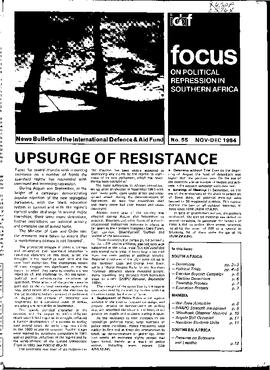
Issue 55 chronicles the intensified resistance to apartheid in South Africa, focusing on rent boycotts, township uprisings, school and university protests, mass detentions, and political trials. It documents electoral boycotts of the segregated parliament, bans on political gatherings, deaths in detention, and brutal state repression. Coverage includes SWAPO's military and political strength in Namibia, press censorship, and war zone atrocities in the Kavango region. Also featured are trials of student activists, trade unionists, and members of banned organisations such as the ANC and AZAPO.
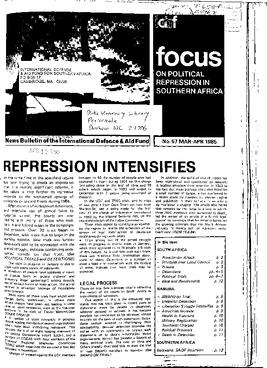
Issue 57 outlines the intensifying political repression in South Africa and Namibia during early 1985. It highlights escalating political trials, over 1,100 detentions in 1984, censorship and state raids on press agencies, the trial of SWAPO fighters under repressive conditions, and the growing use of the Internal Security Act. The issue reports on community resistance, school boycotts, labour union suppression, press censorship, and constitutional manipulation to preserve apartheid structures. It includes detailed trial summaries, prisoner lists, and coverage of Nelson Mandela’s conditional release rejection.